April 27, 2026
World
World

WASHINGTON, April 27 — A man accused of targeting US administration officials at a Washington event has been arrested after allegedly opening fire, injuring a Secret Service agent.

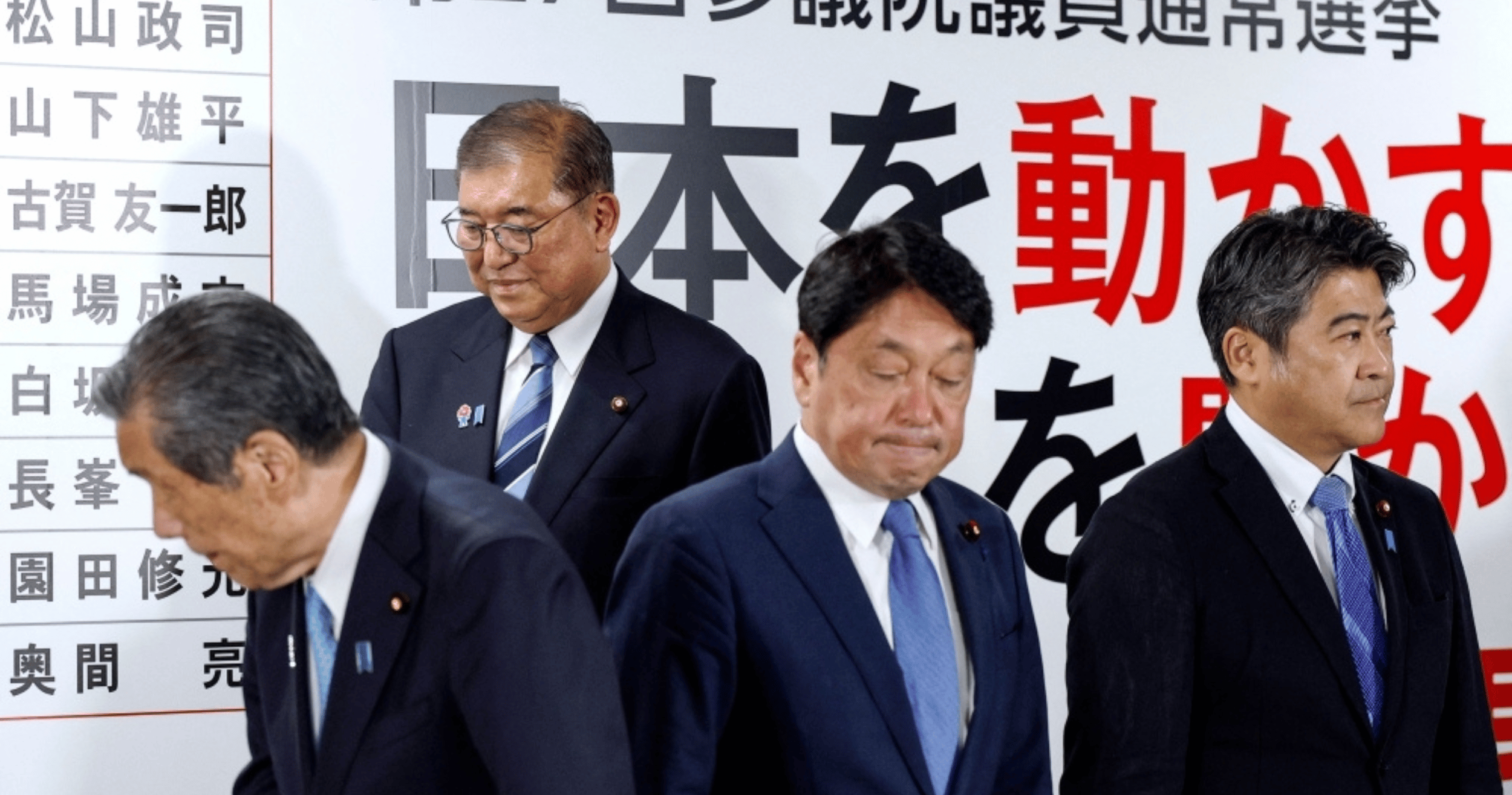
TOKYO, July 21 — Japanese Prime Minister Shigeru Ishiba’s political future hangs in the balance after his ruling coalition suffered a significant setback in upper house elections, losing its majority amid a surge in support for a right-wing populist party.


TOKYO, July 21 — Japanese Prime Minister Shigeru Ishiba’s political future hangs in the balance after his ruling coalition suffered a significant setback in upper house elections, losing its majority amid a surge in support for a right-wing populist party.
The long-dominant Liberal Democratic Party (LDP) and its junior partner Komeito needed to win 50 seats in Sunday’s vote but managed only around 41, according to local media projections.
Voter frustration over rising inflation drove many to back alternative parties—especially the nationalist Sanseito, which gained momentum with its anti-globalist stance echoing the rhetoric of former U.S. President Donald Trump.
This defeat follows a similar blow just months ago when Ishiba’s coalition lost its grip on the lower house, marking the LDP’s worst performance in 15 years.
Ishiba, 68, a self-described policy “geek” who finally clinched LDP leadership last September after four failed attempts, remained guarded about his future in comments late Sunday.
“It’s a tough situation. We must reflect on this seriously and humbly,” he told NHK. When pressed about stepping down, he replied, “I can’t speak lightly about that.”
He added, “We need to see the final results before taking action, but we fully acknowledge our responsibility.”
Should Ishiba resign, there’s no clear successor lined up to become the LDP’s 11th prime minister since 2000—especially now that the coalition must rely on opposition support in both chambers.
“There might be a leadership change, but it’s uncertain who would take over,” said Professor Hidehiro Yamamoto from the University of Tsukuba.
Economic Strain
Japan’s fourth-largest economy has been struggling with inflation since Russia’s invasion of Ukraine in 2022. Prices, particularly for rice, have doubled, squeezing household budgets even as the government issued financial support.
“I’m seeing my pension shrink more and more,” said 65-year-old voter Hisayo Kojima in Tokyo. “We’ve contributed so much to the system. This is the most urgent issue for me.”
Public discontent has also been fueled by an LDP funding scandal and looming 25% U.S. tariffs set to take effect August 1, unless a trade deal is reached. Already, Japanese imports face a 10% levy, and the critical auto industry is being hit hard.
Recent export data showing a sharp drop in U.S.-bound car shipments has sparked fears of a potential recession.
Despite early diplomatic efforts—including a February meeting with Trump and seven trade envoy visits to Washington—no agreement has been reached.
Rise of Sanseito
The last time the LDP-Komeito coalition failed to secure an upper house majority was in 2010, following a previous loss in 2007. That era led to a short-lived government by the now-defunct Democratic Party of Japan in 2009.
Currently, the opposition remains fragmented, making it unlikely they could form a cohesive alternative government.
Sanseito, the emerging populist party, has captured attention with its calls for stricter immigration rules, opposition to globalism and progressive gender policies, and skepticism about decarbonization and vaccines.
The party recently denied any ties to Russia after a candidate appeared on Russian state media, amid speculation about Moscow’s support for populist movements.
“They’re saying exactly what I’ve felt for years but never knew how to express,” said one supporter at a Sanseito rally. — AFP
WASHINGTON, April 27 — A man accused of targeting US administration officials at a Washington event has been arrested after allegedly opening fire, injuring a Secret Service agent.

KUALA LUMPUR, April 27 — Social media platforms removed 43,618 pieces of scam-related content in the first quarter of this year, Deputy Communications Minister Teo Nie Ching said.

BEIJING, April 26 — China’s top diplomat Wang Yi said Beijing would “firmly support” Myanmar in safeguarding its sovereignty and security during talks with junta leader-turned-president Min Aung Hlaing.