Miros investigates suspected brake failure in lorry involved in fatal Kajang toll crash that claimed life of one-year-old boy
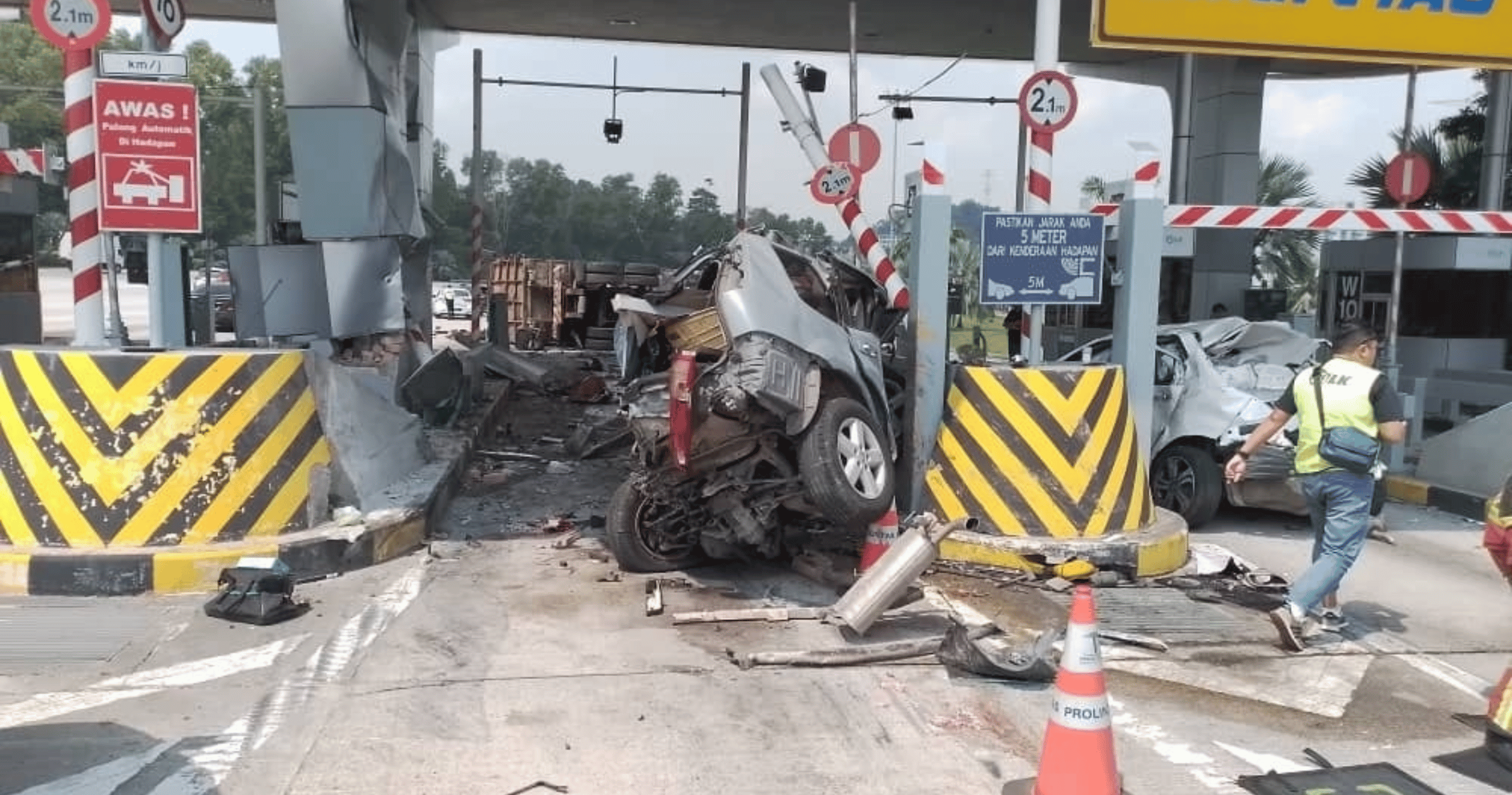
KUALA LUMPUR, Sept 30 — The Malaysian Institute of Road Safety Research (Miros) is investigating the lorry suspected of causing the fatal crash at the Kajang toll plaza, with particular focus on a possible brake system failure.
KUALA LUMPUR, Sept 30 — The Malaysian Institute of Road Safety Research (Miros) is investigating the lorry suspected of causing the fatal crash at the Kajang toll plaza, with particular focus on a possible brake system failure.
In a statement, Miros said its Crash Investigation Team is working to establish whether brake failure or other factors triggered the tragedy.
“Miros is collaborating with the Royal Malaysia Police (PDRM), Road Transport Department (JPJ), and the Land Public Transport Agency (APAD) to ensure a comprehensive investigation. This evaluation is crucial in identifying the root cause and formulating effective preventive measures,” it said.
The accident, which occurred at 10.50am last Saturday, involved a lorry, a car, and two sport utility vehicles (SUVs). A one-year-old boy was killed while seven others were injured.
Kajang District Police Chief ACP Naazron Abdul Yusof said preliminary findings showed the lorry was last serviced in April. The driver claimed he had leapt out of the vehicle after experiencing brake failure.
Transport Minister Anthony Loke later revealed that the lorry had two valid permits and had passed inspection at Puspakom, the national vehicle inspection centre. Despite this, its brakes are believed to have failed, causing the lorry to ram into the toll plaza and collide with several vehicles.
Miros stressed that consistent maintenance is vital for road safety, particularly for commercial vehicles frequently carrying heavy loads. Drivers and operators, it said, must inspect brakes, tyres, and other key components before every trip, and comply with maintenance schedules and road regulations, including observing speed limits, resting adequately, and avoiding risky driving behaviour.
A 2022 Miros study found that only 31.9 per cent of public and commercial vehicle operators adhered to the Industry Code of Practice (ICOP) for Road Transport Safety. Larger operators recorded compliance at 93.6 per cent, compared to much lower rates among smaller operators. Express and tour buses showed higher compliance at 78 per cent and 71 per cent respectively, while lorries trailed significantly at just four per cent.
The institute also underlined the importance of Child Restraint Systems (CRS), mandatory in Malaysia since Jan 1, 2020, though usage remains low at around 30 per cent as of 2022.
PDRM data indicated that from 2014 to 2023, an average of 434 children died annually in road accidents — equivalent to eight child deaths per week.
“Properly installed child seats, tailored to a child’s height and weight, can cut the risk of fatal injuries by 54 to 71 per cent for children aged between 0 and 4,” Miros said.
It urged policymakers, enforcement agencies, and the transport industry to intensify advocacy, education, and enforcement to boost CRS usage nationwide. — Bernama
Miros said its Crash Investigation Team is working to determine whether brake failure or other factors were the primary cause of the tragic incident. — Picture via Facebook
BANGKOK, April 24 — Thailand’s Supreme Court on Friday agreed to hear a petition accusing 44 current and former opposition lawmakers of ethics violations over their 2021 move to amend a law protecting the monarchy from criticism, according to Thai media reports.
PUTRAJAYA, April 24 — The Court of Appeal today dismissed Kepala Batas MP Dr Siti Mastura’s appeal against a High Court ruling ordering her to pay RM825,000 in damages and costs for defaming three DAP leaders by linking them to former Communist Party of Malaya leader Chin Peng.
THE HAGUE, April 23 — Former Philippines president Rodrigo Duterte will stand trial at the International Criminal Court after judges on Thursday confirmed charges of crimes against humanity over his controversial “war on drugs.”