Sinking land, rising seas: Filipinos on Pugad Island struggle to hold on
BULACAN (Philippines), Sept 12 — On Pugad Island, street food vendor Maria Tamayo begins her mornings long before her grandchildren wake, scooping seawater out of her flooded home with a plastic dustpan — a daily struggle ever since the rising tides of Manila Bay began engulfing the island.
BULACAN (Philippines), Sept 12 — On Pugad Island, street food vendor Maria Tamayo begins her mornings long before her grandchildren wake, scooping seawater out of her flooded home with a plastic dustpan — a daily struggle ever since the rising tides of Manila Bay began engulfing the island.
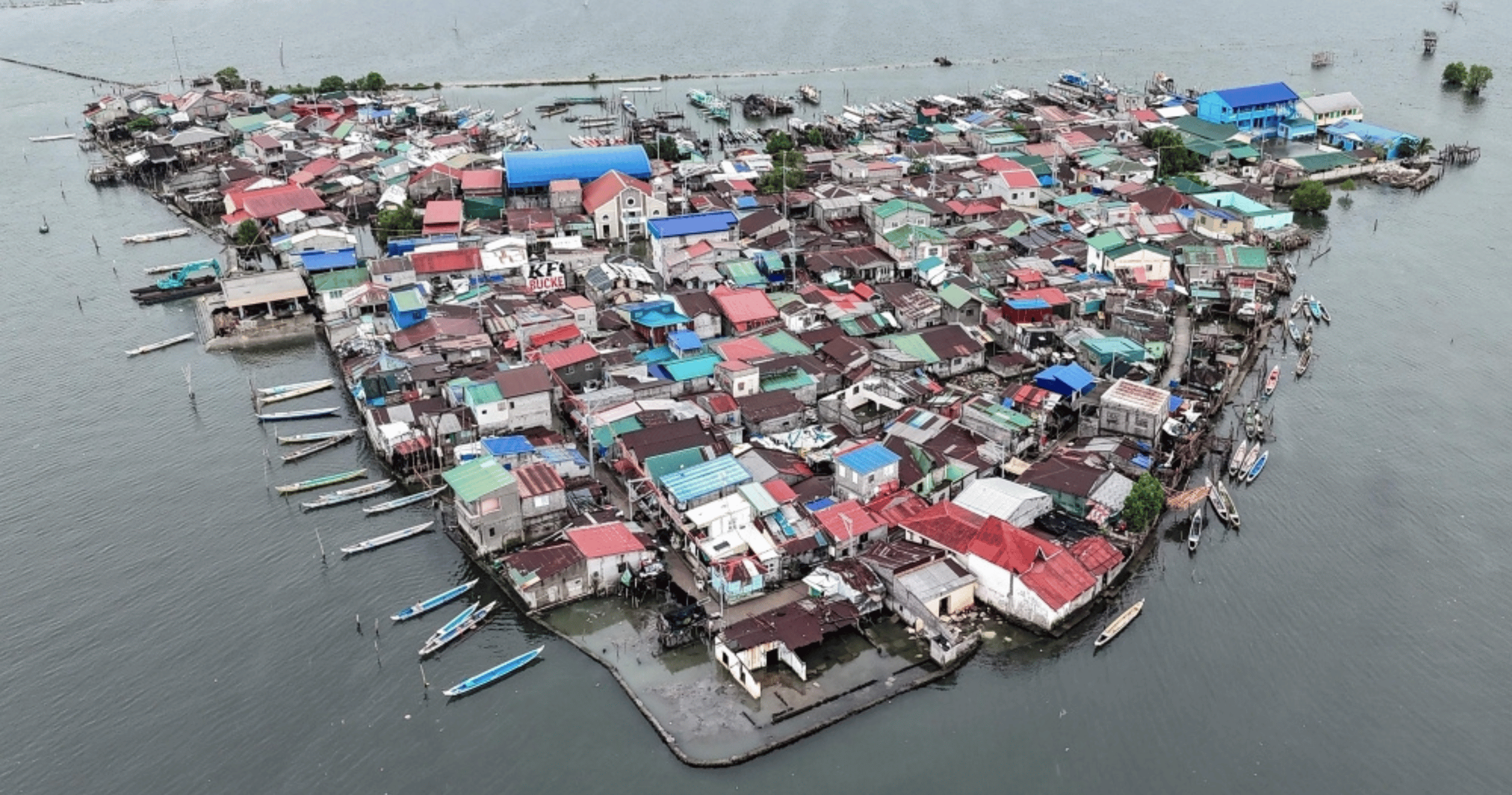
The seven-hectare island, home to about 2,500 residents, is slowly disappearing beneath the sea.
“Scooping water takes hours. My feet ache from it,” said the 65-year-old, explaining she can spend up to three hours each day on the task. “I have to clear the water before my grandchildren wake up, otherwise they’ll slip on the floor. But no matter how much I scoop, the water keeps coming.”
Pugad is not alone. Across coastal Bulacan, parts of the province are sinking by nearly 11 centimetres annually — the fastest rate in the Philippines — according to geologist Mahar Lagmay. The phenomenon, known as land subsidence, is driven by excessive groundwater extraction and worsened by climate change-induced sea level rise.
“Subsidence rates around Pugad Island are alarmingly high,” Lagmay said, noting that while island-specific studies are lacking, nearby data clearly reflects the threat.
High tides now flood Pugad’s streets at least three times a week, shaping everyday life. Schools adjust schedules based on tide charts, homes are built on stilts, and shopkeepers raise their goods on tall tables to avoid water that can reach 1.5 metres during heavy flooding.
Across the Philippines, sea levels are rising three times faster than the global average of 3.6 millimetres a year, with projections suggesting the pace could accelerate to 13 millimetres annually, according to the Department of Environment and Natural Resources (DENR).
“Sea level rise is affecting many coastal areas, and without large-scale intervention, some could vanish,” warned Karlo Queano, DENR’s geosciences chief. Yet a comprehensive government plan is not expected until 2028, despite a ban on groundwater extraction in parts of Bulacan since 2004.
Village chief Jaime Gregorio believes a return to “normal” life is already impossible. Roads are raised every three years, but inconsistent leadership has slowed long-term flood control projects.
For Tamayo’s family, adapting has been financially draining. Since 2022, they have spent 200,000 pesos (RM14,775) raising their home each year with gravel and concrete.
“I love this island — my parents raised me here. But sometimes I think of leaving because of the tides,” she said. Her husband, Rodolfo, insists they must stay: “If we leave, we won’t have work. We’ll go hungry.”
Lagmay said subsidence could be mitigated with stricter policies on groundwater use, but tackling rising seas requires collective global action to cut greenhouse gas emissions. A UN climate fund created in 2023 to help vulnerable nations like the Philippines, however, has yet to be put into practice.
“This is about climate justice,” said Elenida Basug, director of DENR’s climate change service. “We contribute so little to climate change, yet we suffer the most from its impacts.”
Sitting in the doorway of her flooded home, Tamayo made a direct appeal to the world’s major polluters: “We are the ones suffering. They are rich — we cannot do anything. Even if we speak out, who will listen?” — AFP
This aerial view taken on July 7, 2025, shows cramped houses on Isla Pugad in Hagonoy town, Bulacan province, north of Manila. Sea levels across the Philippines as a whole are rising three times faster than the global average of 3.6 millimeters per year, and the Department of Environment and Natural Resources (DENR) has said this could accelerate to 13 millimeters annually. — AFP pic
BANGKOK, April 24 — Thailand’s Supreme Court on Friday agreed to hear a petition accusing 44 current and former opposition lawmakers of ethics violations over their 2021 move to amend a law protecting the monarchy from criticism, according to Thai media reports.
PUTRAJAYA, April 24 — The Court of Appeal today dismissed Kepala Batas MP Dr Siti Mastura’s appeal against a High Court ruling ordering her to pay RM825,000 in damages and costs for defaming three DAP leaders by linking them to former Communist Party of Malaya leader Chin Peng.
THE HAGUE, April 23 — Former Philippines president Rodrigo Duterte will stand trial at the International Criminal Court after judges on Thursday confirmed charges of crimes against humanity over his controversial “war on drugs.”