Tariffs, Taiwan, and South China Sea: Rubio set to meet China’s Wang at high-stakes ASEAN summit in Malaysia
KUALA LUMPUR, July 11 — US Secretary of State Marco Rubio is scheduled to meet his Chinese counterpart Wang Yi today on the sidelines of ASEAN talks in Malaysia, with Washington’s tariff policy taking centre stage.
KUALA LUMPUR, July 11 — US Secretary of State Marco Rubio is scheduled to meet his Chinese counterpart Wang Yi today on the sidelines of ASEAN talks in Malaysia, with Washington’s tariff policy taking centre stage.
This will mark Rubio and Wang’s first in-person meeting since US President Donald Trump returned to office, amid ongoing tensions between Washington and Beijing over a wide range of issues including trade, fentanyl, Taiwan, and technology.
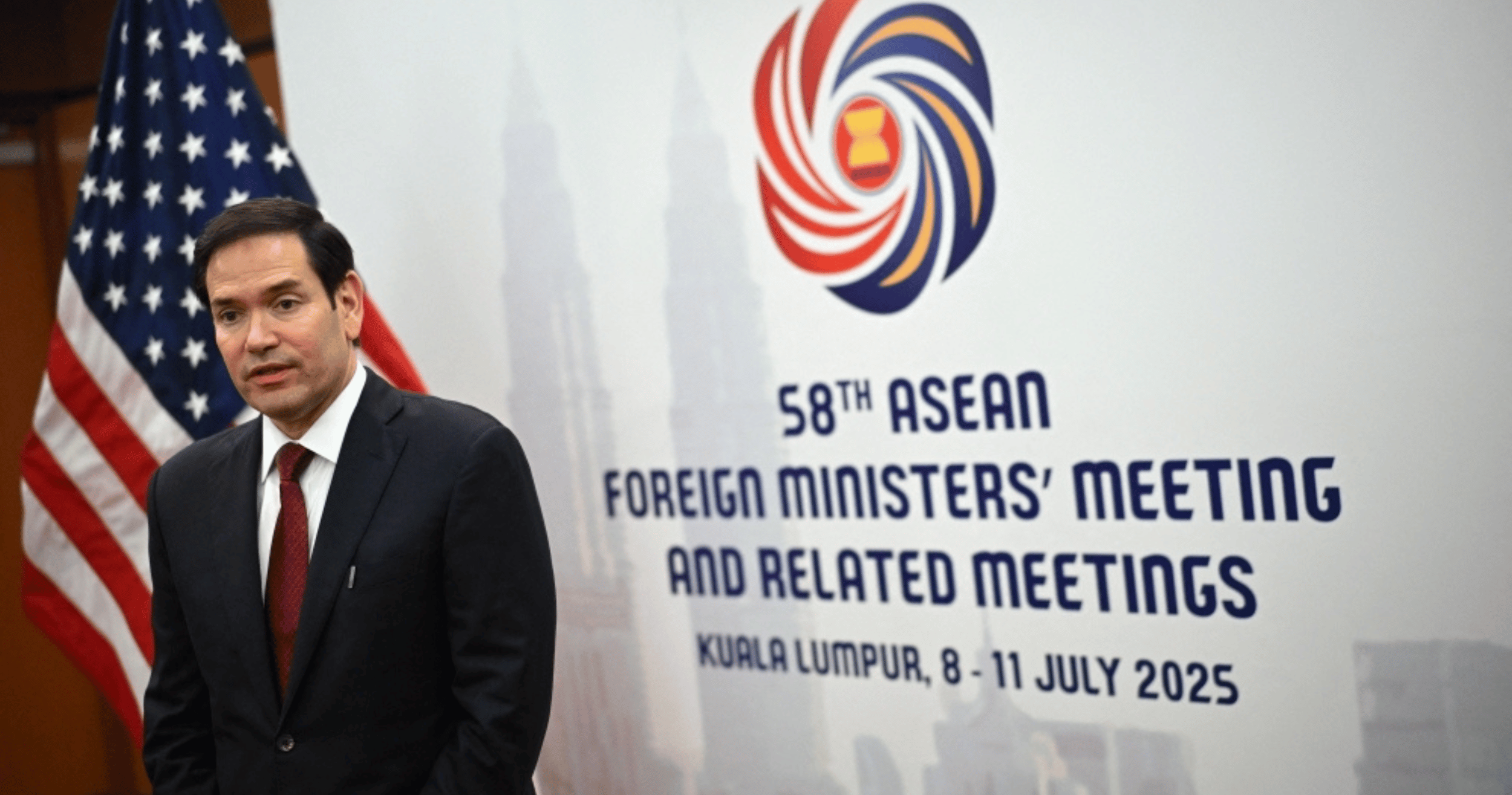
Both diplomats are in Kuala Lumpur for the ASEAN Foreign Ministers’ Meeting, which also includes participation from Japan, South Korea, and Australia.
Ahead of Rubio’s inaugural visit to the region as Secretary of State, US officials emphasised that Washington remains committed to East and Southeast Asia.
On Thursday, Rubio reaffirmed this stance, stating that the United States has “no intention of abandoning” the Asia-Pacific region.
However, much of the summit has been overshadowed by concerns over US tariff threats. Rubio attempted to ease regional anxieties, suggesting that ongoing discussions could lead to “better” tariff rates for Asian partners compared to the rest of the world.
President Trump has warned that countries failing to reach trade agreements with the US by August 1 could face punitive tariffs ranging from 20 to 50 per cent—many of those targeted are in Asia.
Malaysian Prime Minister Datuk Seri Anwar Ibrahim this week described tariffs as being used as “sharpened instruments of geopolitical rivalry.”
Meanwhile, Wang Yi called for a “fairer and more reasonable” international order, criticising what he described as “unilateral protectionism” and the “abuse of tariffs by a certain major country.”
Tensions between the US and China have escalated since Trump resumed office in January, with both sides engaging in a tariff war. At one stage, the US imposed additional tariffs of up to 145 per cent on Chinese goods, while China retaliated with duties reaching 125 per cent on American products.
In May, both sides agreed to temporarily reduce tariffs in what Trump called a “total reset.”
Taiwan and the South China Sea
Rubio, a long-time critic of China even before becoming Secretary of State in January, is also expected to raise US concerns over Beijing’s actions in the South China Sea and its military pressure on Taiwan.
China claims Taiwan—a democratic, self-governing island—as part of its territory and has not ruled out the use of force to assert control.
While the US does not maintain formal diplomatic ties with Taiwan, it is the island’s largest arms supplier and has shown increasing support for Taipei amid mounting pressure from Beijing.
In late May, US Defence Secretary Pete Hegseth accused China of “credibly preparing to potentially use military force to alter the balance of power” in the Asia-Pacific, stating that Beijing “trains every day” to invade Taiwan.
Chinese officials responded by accusing Washington of using the Taiwan issue to “contain China” and warned the US to stop “playing with fire.” — AFP
US Secretary of State Marco Rubio attends a press briefing during the 58th ASEAN Foreign Ministers’ Meeting and related events at the Convention Centre in Kuala Lumpur on July 10, 2025.
MANCHESTER, April 28 — Manchester United moved closer to securing Champions League qualification with a 2-1 victory over Brentford on Monday, but interim manager Michael Carrick said the team must continue pushing to finish as high as possible in the Premier League.
TEHRAN, April 28 — Iran on Tuesday said the United States is no longer in a position to dictate terms to other nations, as Washington reviews a new Iranian proposal concerning the reopening of the Strait of Hormuz.