May 26, 2026
World
World

SYDNEY, May 26 — A group of seven women and 12 children believed to be linked to Islamic State fighters are returning to Australia after spending years in Syria, the Australian interior minister said Tuesday.


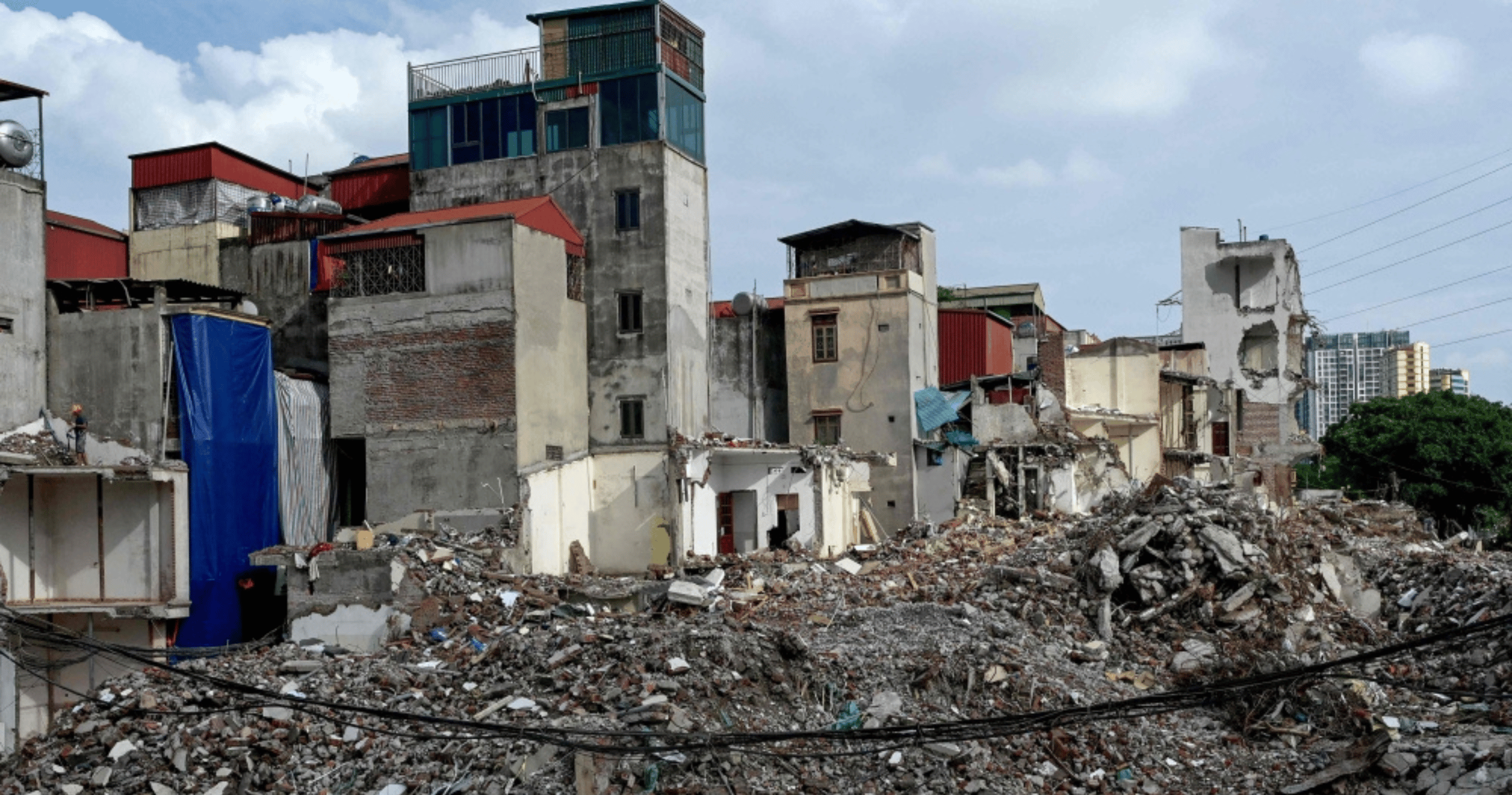
HANOI, May 25 — Entire rows of townhouses are being demolished within hours, roads are torn up by bulldozers, and city blocks are reduced to rubble in the name of progress, as vast construction sites spread across Hanoi amid its rapid urban renewal push.


HANOI, May 25 — Entire rows of townhouses are being demolished within hours, roads are torn up by bulldozers, and city blocks are reduced to rubble in the name of progress, as vast construction sites spread across Hanoi amid its rapid urban renewal push.
A “100-year master plan” for the Vietnamese capital includes new bridges, subway lines, and riverside developments.
Authorities say hundreds of thousands could be relocated to make way for construction, as the city of eight million prepares to accommodate twice that population by 2045.
Communist leaders are aiming for Vietnam to become a developed nation by then, driven by rapid growth and large-scale infrastructure investment.
However, the speed of implementation has unsettled residents, left some homeless, and raised fears among many others of a similar fate.
“I have never seen authorities acting that quickly,” said Hung, a 51-year-old businessman whose home was demolished last month for a US$750 million (RM3 billion) bridge across the Red River.
“My father lived there his whole life, he knew every corner and everyone. Now he has seen it all disappear in an instant,” he said, adding he requested to be identified only by his first name.
He said he received 10 billion dong in compensation and a rural land plot, though he claimed the home’s market value was nearly three times higher.
While acknowledging the bridge benefits the wider public, he said it does not benefit those displaced.
“We are unfortunate to be the ones affected by this massive restructuring of Hanoi.”
'No joke’
Hanoi, a city of under half a million for most of its thousand-year history, expanded rapidly in the 1980s and 1990s during Vietnam’s shift toward market-oriented reforms.
Many rural migrants built homes on land without formal ownership, forming sprawling, semi-planned neighbourhoods with narrow, winding streets.
Since then, the city has formalised development and carried out several rounds of urban renewal.
However, these earlier plans “were often joked about because they remained on paper and were barely implemented,” said Danielle Labbe, an urban planning professor at the University of Montreal who studies Vietnam.
Now, the 100-year master plan is moving forward at full speed.
Top leader To Lam has called for a “new growth model” involving major infrastructure expansion, alongside faster approvals and reduced bureaucracy, according to analysts.
The redevelopment includes seven new bridges and more than 1,200 kilometres of metro and rail lines, with total costs expected to exceed US$2.5 trillion over two decades.
Road widening projects and upgraded drainage systems are also underway to address climate-related flooding risks.
More than 11,000 hectares along the river are planned for residential and park developments, with around 250,000 residents expected to be relocated.
State media has reported that as many as 860,000 people could ultimately be displaced, though authorities have disputed the figure without providing an alternative.
Hanoi’s planning and architecture department did not immediately respond to AFP’s requests for comment.
While many residents support modernisation — described by Labbe as “very pro-development” — the rapid pace and limited public consultation have fueled discontent.
She noted the master plan spans over 1,000 pages but was open for public comment for only about 10 to 15 days.
“Plans didn’t used to be approved and implemented this quickly,” she said.
‘No greater pain’
Ho Chi Minh City also has a 100-year master plan, as Vietnam accelerates infrastructure development in a manner comparable to major regional powers in scale and ambition.
“To me, the influence of Chinese planning is very clear,” Labbe said.
Retired cleaner Phan received her final eviction notice in February, with her four-storey home set for demolition this week.
The 10-member, three-generation family has since split up and moved in with relatives.
Authorities offered a discounted price for a much smaller apartment costing US$76,000, but because they lacked formal land ownership, they were compensated only US$19,000 for construction costs.
“So now the family is in a very difficult situation and has to borrow money,” said Phan, 69.
“Our family used to eat together, sit together, and live happily under one roof,” she said in tears.
“Now the family is broken apart, scattered everywhere. There is no pain greater than this.” — AFP
SYDNEY, May 26 — A group of seven women and 12 children believed to be linked to Islamic State fighters are returning to Australia after spending years in Syria, the Australian interior minister said Tuesday.

SEMPORNA, May 26 — Physical damage to the marine ecosystem at the Pulau Selakan Coral Reef Restoration Site here, caused by recent fish bombing activities, will face firm legal action from the Sabah state government.

WASHINGTON, May 25 — US President Donald Trump has tempered expectations of a Middle East agreement, saying yesterday he instructed negotiators not to “rush,” even as Tehran and Washington signal progress toward a deal aimed at ending the war.