Why mass kidnappings in Nigeria are rising again — and how Trump factors into the situation
LAGOS, Nov 26 — A recent wave of mass abductions in Nigeria — including the kidnapping of nearly 350 schoolchildren within days — has renewed urgent discussions about the country’s longstanding security challenges.
LAGOS, Nov 26 — A recent wave of mass abductions in Nigeria — including the kidnapping of nearly 350 schoolchildren within days — has renewed urgent discussions about the country’s longstanding security challenges.
This resurgence follows remarks by US President Donald Trump, who threatened military intervention in Nigeria to stop what he described as the killing of Christians by radical Islamists. In response, the Nigerian government stressed that violence affects communities across all religious and ethnic lines.
Nigeria, a diverse nation of 230 million people, continues to grapple with deep-rooted conflicts that have claimed the lives of both Christians and Muslims. AFP examines how mass kidnappings have evolved in Africa’s most populous country.
Origins of mass kidnappings
Global attention first turned to Nigeria’s kidnapping crisis in 2014, when Boko Haram militants abducted nearly 300 girls from their school in Chibok. Since then, armed groups have carried out hundreds of mass abductions, especially in remote and poorly policed regions, targeting vulnerable communities for ransom.
In the most recent Catholic school attack, survivors described armed men arriving at night and herding victims into buses, vans, and motorcycles.
Who is behind the abductions?
Kidnappings in northern Nigeria are carried out by both jihadist factions and criminal groups known as “bandits”. In northwestern rural regions, bandits raid villages, seize hostages for ransom, and steal livestock.
While their origins lie in farmer–herder conflicts, the groups have grown more organised since 2011 amid rising arms trafficking and instability across the Sahel.
Who are the usual targets?
Large groups, particularly schoolchildren, remain most vulnerable. Of the more than 300 children abducted from St Mary’s school in Niger State on Friday, only 50 have managed to escape. Schools in at least nine states are now fully or partially closed due to fear of further attacks.
Is the crisis worsening?
Exact figures are elusive, as many kidnappings go unreported. However, Nigeria has endured a “continuous kidnapping epidemic” for more than a decade, according to the International Crisis Group’s Nnamdi Obasi. Estimates suggest between 3,600 and 7,500 people were abducted annually from 2022 to 2024.
Beacon Security, a cybersecurity firm, recorded a 100 per cent increase in kidnappings from early 2024 to 2025, while armed attacks surged more than 250 per cent.
Despite the government’s 2014 “safe schools” initiative, experts say the root problems remain unresolved.
Government response and challenges
Nigeria’s military — one of the strongest in the region — is stretched thin, battling jihadist insurgencies alongside other security threats. Meanwhile, with around 370,000 police officers nationwide, nearly 100,000 were previously assigned to VIP protection before being reassigned under President Bola Tinubu.
Observers argue that political inaction has contributed to the worsening crisis, leaving ordinary citizens to bear the consequences. Activists say years of weak enforcement have emboldened armed groups, turning the kidnapping of schoolchildren into a lucrative business.
The Trump factor
The sharp rise in abductions has prompted speculation about whether Trump’s comments encouraged armed groups. Some analysts believe his remarks may have emboldened opportunists seeking to exploit global narratives.
Others suggest militants are amassing hostages as potential human shields should the US act on its threat of airstrikes.
A local leader in Borno — a state scarred by 16 years of Islamist insurgency — echoed this view after 13 women and girls were kidnapped on Saturday.
Still, Obasi notes the attacks may also be intended as acts of defiance, challenging the US to follow through on its threats.— AFP
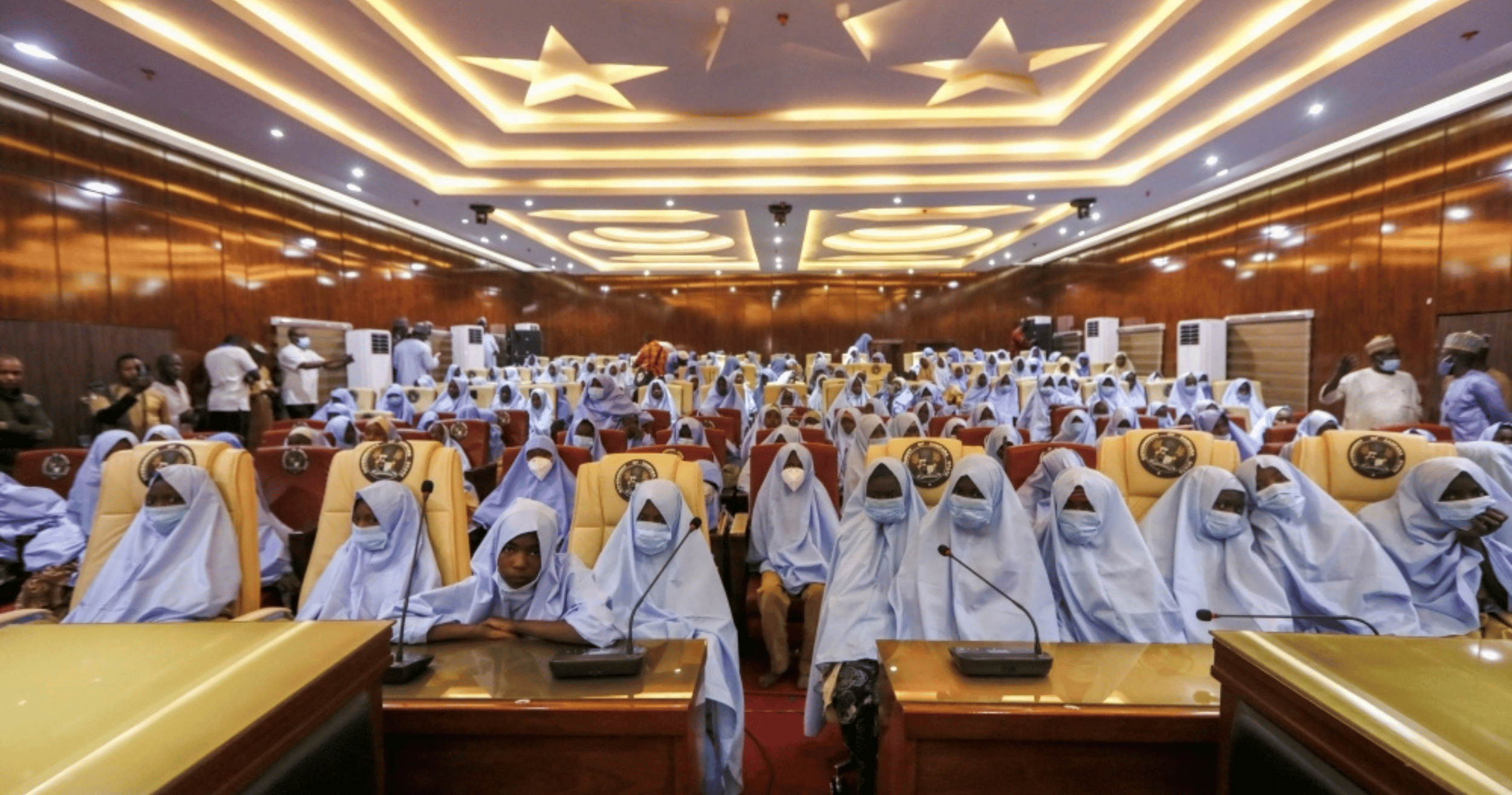
Girls abducted from a boarding school in Zamfara, northwest Nigeria, are seen after their release on March 2, 2021. — Reuters pic
BANGKOK, April 24 — Thailand’s Supreme Court on Friday agreed to hear a petition accusing 44 current and former opposition lawmakers of ethics violations over their 2021 move to amend a law protecting the monarchy from criticism, according to Thai media reports.
PUTRAJAYA, April 24 — The Court of Appeal today dismissed Kepala Batas MP Dr Siti Mastura’s appeal against a High Court ruling ordering her to pay RM825,000 in damages and costs for defaming three DAP leaders by linking them to former Communist Party of Malaya leader Chin Peng.
THE HAGUE, April 23 — Former Philippines president Rodrigo Duterte will stand trial at the International Criminal Court after judges on Thursday confirmed charges of crimes against humanity over his controversial “war on drugs.”