April 20, 2026
Local
Local

KOTA TINGGI, April 20 — A 71-year-old man has been remanded for seven days until April 26 in connection with a shooting incident in Taman Kota Jaya that left three people dead yesterday.


SEOUL, March 30 — China has resumed direct flights between Beijing and Pyongyang for the first time since the Covid-19 pandemic, although North Korea is currently only permitting entry for travellers with official or other special purposes.


SEOUL, March 30 — China has resumed direct flights between Beijing and Pyongyang for the first time since the Covid-19 pandemic, although North Korea is currently only permitting entry for travellers with official or other special purposes.
AFP examines tourism in one of the world’s most isolated countries, as well as evolving relations between Pyongyang and its key economic and diplomatic allies, China and Russia.
Do tourists still visit North Korea?
Before border closures during the pandemic, North Korea recorded an estimated 300,000 foreign visitors in 2019, according to the Korea Institute for International Economic Policy, with about 90 per cent coming from China.
Roughly 5,000 Western tourists were believed to visit annually before the pandemic. The United States later banned travel after the detention and death of American student Otto Warmbier in 2017.
In 2024, North Korea allowed Russian tourists to return, while select Western tour operators briefly resumed organised visits in early 2025 under strict controls.
British visitor Ben Weston told the BBC that even basic movements were closely monitored, saying he sometimes had to inform guides when he needed to use the bathroom.
Although a new beach resort dubbed “North Korea’s Waikiki” had been expected to attract Russian visitors, authorities later barred foreign entry last July.
Some foreigners also visited Pyongyang in April 2025 for the city’s first marathon since 2019, though this year’s event was abruptly cancelled.
Can Chinese tourists travel now?
North Korea’s Air Koryo had already restarted Beijing–Pyongyang flights in 2023. Rail freight resumed in late 2022, while passenger train services between the two capitals restarted on March 13 after a six-year suspension.
Current cross-border travellers are mainly students, workers, or individuals with family connections.
However, Chinese travel agencies have recently begun promoting North Korea tour packages in April, alongside foreign operators such as Young Pioneer Tours, which previously brought Western tourists into the country via China.
How are China–North Korea relations?
China remains North Korea’s largest trading partner and a crucial source of diplomatic and economic support for the country of 26 million people.
This includes food and energy exports, particularly during the famine of the 1990s. Bilateral trade — which includes exports such as wigs produced in North Korea — has reportedly rebounded since the pandemic to nearly US$3 billion annually.
Despite this, relations have often been complex, with analysts noting that North Korea’s nuclear ambitions have sometimes been viewed as a strategic liability by Beijing.
More recently, global geopolitical tensions, including Russia’s war in Ukraine and shifting US politics, have elevated Kim Jong Un’s international profile.
Last year, he appeared alongside Chinese President Xi Jinping and Russian President Vladimir Putin at a military parade in Beijing.
Analysts say rising tensions in the Middle East have further increased the importance of coordination between Pyongyang and Beijing, while China appears to be shifting from pressuring denuclearisation toward ensuring regime stability in North Korea.
What about Russia?
North Korea has also deepened ties with Russia, reportedly sending thousands of troops to support Moscow’s war in Ukraine, with South Korean estimates suggesting around 2,000 fatalities, alongside supplies of missiles and munitions.
In return, Pyongyang is believed to be receiving financial assistance, military technology, food, and energy, reducing its dependence on China. Russian President Vladimir Putin visited North Korea in 2024.
Transport links with Russia have also reopened earlier than those with China, reflecting shifting priorities in Pyongyang’s foreign relations.
Some analysts argue that the reopening of borders is driven primarily by North Korea’s own timeline, rather than external influence from Beijing.
Strategic backdrop
With global power dynamics shifting, analysts say China may also use its ties with North Korea as diplomatic leverage, particularly in future engagements with the United States.
Beijing is seen as moving toward supporting regime stability rather than pushing for denuclearisation, signalling that a nuclear-armed North Korea is increasingly treated as a geopolitical reality. — AFP
KOTA TINGGI, April 20 — A 71-year-old man has been remanded for seven days until April 26 in connection with a shooting incident in Taman Kota Jaya that left three people dead yesterday.
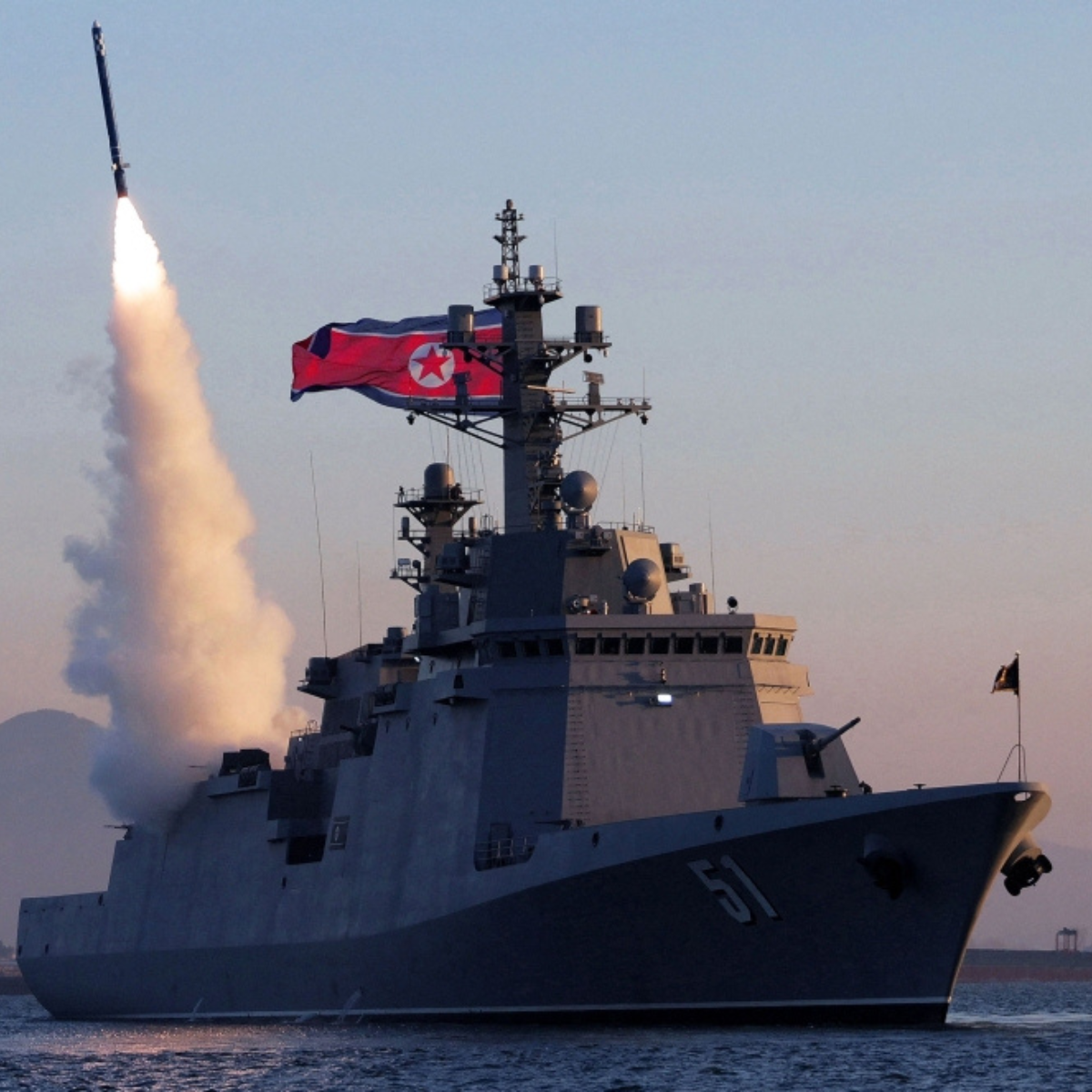
SEOUL, April 19 — North Korea fired multiple ballistic missiles on Sunday, South Korea’s military said, marking the latest in a series of recent weapons launches by the nuclear-armed state.

KUALA LUMPUR, April 19 — The federal and Sabah governments are working together to provide immediate basic aid and temporary shelter for victims of a fire that destroyed Kampung Bahagia in Sandakan.